Replacing your Lathem
What happens to your punch history, which terminal replaces yours, and what it costs. Written for people who already own the hardware — not a sales comparison.
Most teams replacing a Lathem are around 20 people and set themselves up in under an hour. Past 100, book a call — the terminal count and site layout are worth working through first.
Your Lathem will not connect to ClockIt
We would rather lead with that than waste your time. ClockIt reads terminals that speak the ADMS push protocol — that means ZKTeco and eSSL devices. A Lathem does not, and no amount of configuration changes it.
So this is a hardware replacement, not an integration. The rest of this page is about what that actually involves and what it costs, including the parts people usually discover too late.
What a Lathem is
Lathem is one of the oldest names in American time clocks — an Atlanta manufacturer whose punch-card machines have been on workshop walls for generations. The modern line pairs fingerprint and proximity terminals with PayClock software, sold either as a desktop package or as PayClock Online.
This guide covers:
Why teams move off Lathem
Software and hardware are priced separately
The terminal is one purchase and PayClock is another, with employee-count tiers on top. Teams comparing total cost against a single per-user subscription often find the arithmetic surprising.
Desktop PayClock ties you to one machine
If you are on the desktop product rather than the online one, your time data lives on a specific PC. That machine has to be backed up, kept running and kept updated, and whoever needs a report has to go and sit at it.
Scheduling and leave are elsewhere
Lathem is strong at capturing punches. Teams that want scheduling, shift swaps and PTO in the same place as attendance usually end up running a second system alongside it.
The punch-card estate is ageing out
Plenty of Lathem sites are still on genuine card punches. The move is usually prompted by the cost and hassle of cards and ribbons, and by wanting the payroll number without adding up a stack of cards by hand.
What replaces what
| Your Lathem setup | With ClockIt |
|---|---|
| Lathem terminal or card punch | ZKTeco fingerprint or face terminal, pre-configured |
| PayClock licence and employee tiers | ClockIt at $2.99/user/month, all features included |
| PayClock desktop on an office PC | Cloud — any browser, any phone, nothing to back up |
| Attendance only, scheduling elsewhere | Time, scheduling, leave and overtime in one place |
The terminal you need
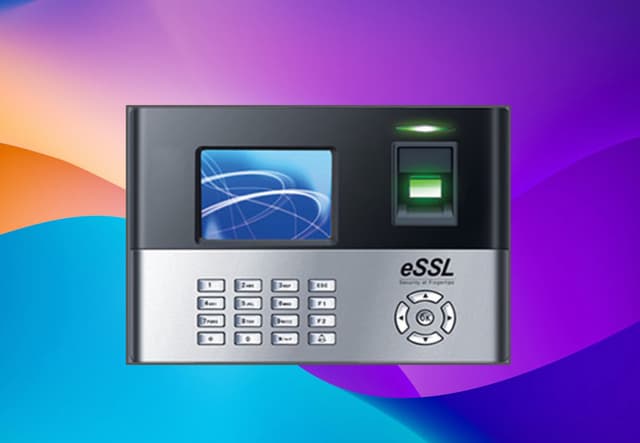
Time Clock X990 FP+RFID Ethernet
The X990 is the industry-standard biometric workhorse, now upgraded for the cloud era. Designed for high-traffic environments like factories, warehouses, and large offices, it combines a rugged hardware build with lightning-fast fingerprint verification (<0.5s).
$450
- Free worldwide shipping
- Arrives pre-configured for your ClockIt account
- Yours outright — no lease, no per-clock licence
How the migration actually goes
- 1
Export your history before you unplug anything
Pull your punch history out of the existing software as CSV while the system is still running. This is the step people skip and regret — once a terminal is decommissioned or a licence lapses, historical punches stored on-device or in a local database can become very hard to reach. Keep the export regardless of whether you import it; payroll audits reach back years.
- 2
Create your ClockIt account
Free to start, no card. Add your employees, set your pay period, and configure overtime rules to match what your old system was doing. Most teams have this done in well under an hour.
- 3
Plug in the new terminal
Your ClockIt device arrives pre-configured for your account. It connects over WiFi or Ethernet and pushes punches to the cloud using built-in ADMS — no local server, no static IP, no port forwarding, no software to install on a PC in the back office.
- 4
Enrol employees and run both in parallel
Enrol fingerprints or faces on the new terminal — a few seconds per person. Run the old clock alongside the new one for one full pay period so you can reconcile the two before you retire the old hardware. Nobody should cut over blind on payday.
- 5
Retire the old terminal
Once a pay period reconciles cleanly, decommission the old clock. Keep the CSV export from step one in your records.
The integration capabilities of this mobile time clock app are outstanding. It seamlessly connects with our existing HR and payroll systems, creating a streamlined workflow that has significantly reduced errors and improved our overall efficiency.
Lathem migration questions
Can ClockIt connect to my Lathem FR700 or PC600?
No. Lathem terminals are designed to work with PayClock and do not support the ADMS push protocol ClockIt uses. Moving off PayClock means replacing the terminal.
How do I get my data out of PayClock?
Export from PayClock as CSV before you stop using it. On desktop PayClock, remember that the data is on that specific PC — if the machine is retired or reimaged the history goes with it, so take the export first.
We still use paper time cards. Is this a big jump?
It is a smaller jump than people expect, and it is the one that pays back fastest. Employees put a finger on a reader instead of feeding a card. The difference is at your end: the total is already calculated, so the hours you spend adding up cards each pay period disappear.
Does ClockIt handle overtime the way PayClock does?
Yes — daily and weekly overtime thresholds, rounding rules and pay periods are all configurable, including the over-8-daily and over-40-weekly rules most US sites run.
Does ClockIt integrate with my existing terminal?
Almost certainly not, and we would rather say so plainly than waste your time. ClockIt connects to terminals that support the ADMS push protocol — that means ZKTeco and eSSL devices. Hand-geometry readers, proximity-card clocks and most access-control terminals do not speak it. If your device is not a ZKTeco or eSSL, the honest answer is that you need new hardware, which is why we sell it pre-configured rather than pretending a connector exists.
How much does the hardware cost?
Terminals in our shop run $450–$650 with free worldwide shipping, and they arrive already configured for your ClockIt account. That is a one-time purchase, not a lease, and there is no per-clock software licence on top of it.
What does the software cost after that?
ClockIt is $2.99 per user per month. There is a free plan to start on and no setup fee, no per-terminal licence, and no annual contract required.
We have 100+ employees. Can we talk to someone first?
Yes — book a call. Once you are past roughly 100 people the questions get specific to your setup: how many terminals across how many sites, how shifts and overtime rules are structured, and how punches need to reach payroll. That is a conversation, not a signup form.
Replacing something else?
Ready to retire the Lathem?
Start free and set your account up today — the terminal can follow once you know it fits. Under 100 employees, most teams do this without talking to anyone.