California Mileage & Expense Reimbursement (2026 Rate & Law)
2026 Private-Employer Benchmark
$0.725 / mile (IRS Standard)
California State Employee Rate
$0.725 / mile (CalHR tracks IRS standard rate)
California strictly requires all private employers to indemnify employees for all necessary business expenditures, including work-related personal vehicle mileage, cell phone usage, and remote-work expenses. Paying the 2026 IRS rate ($0.725/mile) is the recognized safe-harbor benchmark unless an employee proves higher actual costs.
Total Reimbursement
$181.25
Total Distance
250 miles
Effective Rate
$0.725/mi
Key California Compliance Rules
- Mandatory for all private employers regardless of company size.
- Employees cannot waive their right to § 2802 expense or mileage reimbursement.
- If using a lump-sum car allowance, employers must clearly identify the reimbursement portion and ensure it fully covers actual driving costs.
- Reimbursement must be paid within a reasonable time (typically on the next payroll cycle).
Expenses, Receipts & Tolls in California
Labor Code § 2802 covers BOTH mileage and general work expenses (smartphones, data plans, tools, home internet) — failing to reimburse triggers statutory interest, attorney fees and PAGA penalties.
Need California wage & overtime thresholds too? Check our US Minimum Wage Hub and Overtime Calculator.
Worked California Payroll Example
Scenario: A Los Angeles home-health nurse drives 280 business miles between patient visits in a biweekly period.
Calculation: 280 miles × $0.725/mile = $203.00 mandatory tax-free reimbursement.
Reimbursement Payout: $203.00
Stay CA compliant without spreadsheet mileage logs
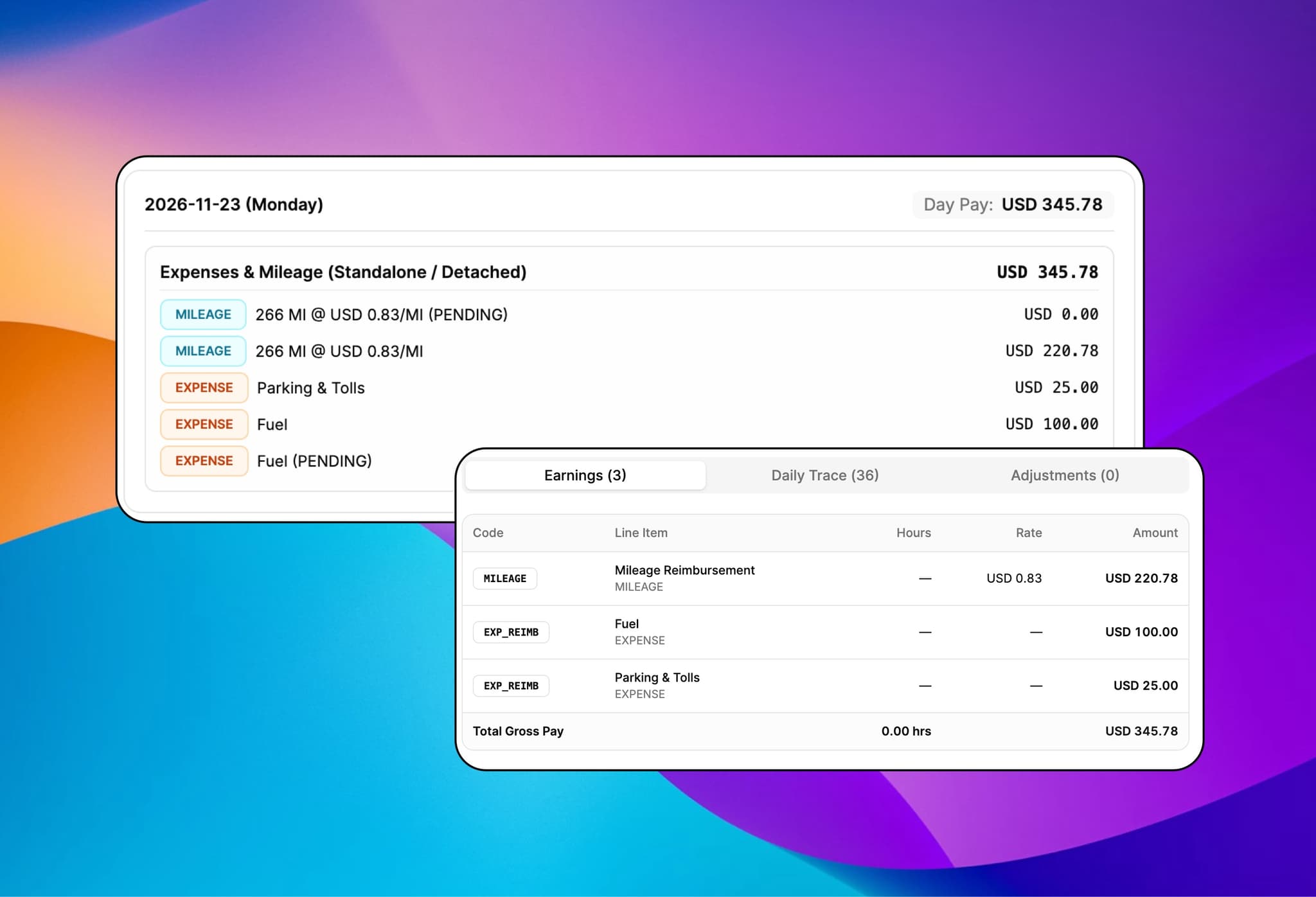
Field crews in California log trips and snap expense receipts directly inside ClockIt on mobile, web or kiosk. Enforce receipt thresholds, spending caps and claim deadlines automatically — then opt approved payouts straight into Payroll Run for QuickBooks, ADP, Gusto or Rippling.
Is mileage reimbursement mandatory in California?
Yes. Under California Labor Code § 2802, employers must reimburse employees for all necessary business driving expenses (excluding ordinary home-to-work commuting).
What is the 2026 California mileage reimbursement rate?
California employers use the 2026 IRS standard rate of $0.725 per mile as the presumptive reasonable reimbursement rate under Labor Code § 2802.
Does California Labor Code § 2802 also cover cell phones and expenses?
Yes. Any necessary work expense — including personal cell phone usage for clocking in/out or client calls, parking, tolls and tools — must be reimbursed in California.
How does ClockIt help California employers stay § 2802 compliant?
ClockIt tracks both mileage logs and expense receipts with mandatory policy guardrails, stores an immutable audit trail, and exports clean non-wage reimbursement lines into Payroll Run.