Texas Mileage & Expense Reimbursement (2026 Rate & Law)
2026 Private-Employer Benchmark
$0.725 / mile (IRS Standard)
Texas State Employee Rate
$0.725 / mile (Texas Comptroller follows IRS rate)
Texas does not have a state statute mandating private-employer mileage reimbursement, so federal FLSA rules apply: employers must reimburse driving costs whenever unreimbursed mileage would push an hourly employee's net pay below minimum wage. Most Texas employers adopt the 2026 IRS rate ($0.725/mile) to stay tax-free and competitive.
Total Reimbursement
$181.25
Total Distance
250 miles
Effective Rate
$0.725/mi
Key Texas Compliance Rules
- No state-level mandate for private employers, but FLSA anti-kickback rules strictly protect hourly drivers and field techs.
- Texas state agencies reimburse at the current IRS standard rate ($0.725/mile in 2026).
- High-mileage Texas field crews (oilfield, HVAC, roofing, staffing) commonly use FAVR plans or $0.725/mile logs.
Expenses, Receipts & Tolls in Texas
Under the Texas Payday Law, once an employer agrees in writing to reimburse mileage or expenses, unpaid reimbursements can become enforceable wage claims.
Need Texas wage & overtime thresholds too? Check our US Minimum Wage Hub and Overtime Calculator.
Worked Texas Payroll Example
Scenario: A Dallas–Fort Worth roofing estimator drives 440 business miles across job sites in one week.
Calculation: 440 miles × $0.725/mile = $319.00 tax-free reimbursement.
Reimbursement Payout: $319.00
Stay TX compliant without spreadsheet mileage logs
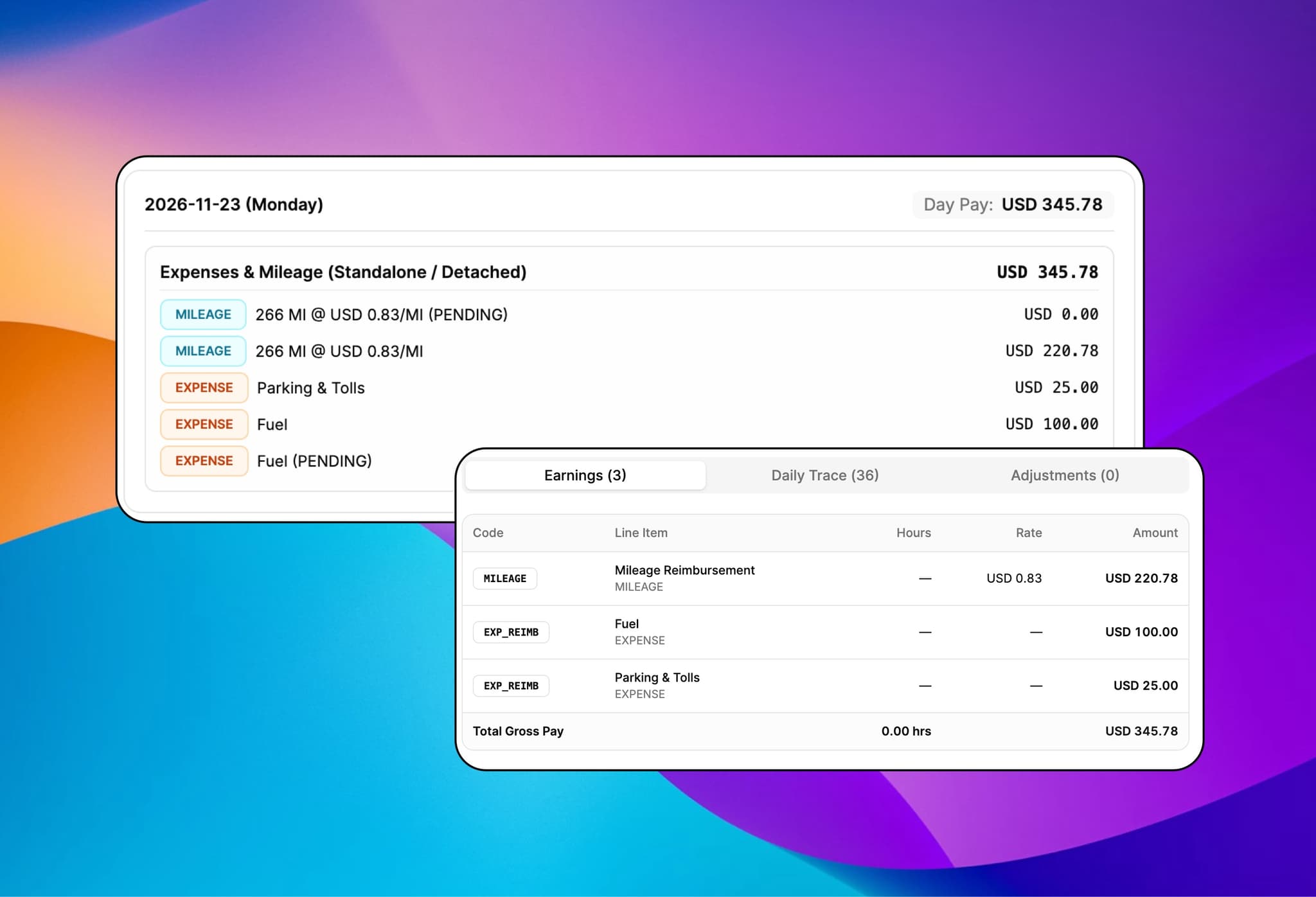
Field crews in Texas log trips and snap expense receipts directly inside ClockIt on mobile, web or kiosk. Enforce receipt thresholds, spending caps and claim deadlines automatically — then opt approved payouts straight into Payroll Run for QuickBooks, ADP, Gusto or Rippling.
Is mileage reimbursement required by law in Texas?
Texas has no state mandate for private employers, but federal FLSA law requires reimbursement if vehicle expenses reduce an employee's effective hourly pay below minimum wage.
What is the 2026 Texas mileage reimbursement rate?
Both the Texas Comptroller (for state employees) and most private Texas businesses follow the 2026 IRS standard rate of $0.725 per mile.
Can Texas employers pay less than the IRS rate?
Yes, provided it does not cause an FLSA minimum-wage violation — though paying the full $0.725/mile maximizes tax-free compensation for field crews.
Does ClockIt work for Texas multi-site field crews?
Yes. Field crews log GPS punches, mileage and tool/fuel receipts from the ClockIt mobile app and sync straight into QuickBooks, ADP or Gusto.