Annual Leave Calculator UK — Holiday Entitlement 2026
Work out statutory holiday entitlement under the Working Time Regulations: 5.6 weeks, capped at 28 days, pro-rated for part-time staff, mid-year starters and irregular-hours workers.
Use 2.5 for someone working alternate days.
Statutory minimum is 28 days. Raise it if your contract is more generous.
Leave booked or used so far this leave year.
The law lets employers count the 8 bank holidays inside the allowance. Turn this off if your team gets them on top.
Pro-rates the allowance across the months actually worked.
Entitlement
28days
This is the statutory minimum for this pattern.
Remaining
28days
Entitlement less the days already taken.
Statutory floor
28days
5.6 weeks × 5 days a week.
Full-time equivalent
28days
The allowance a 5-day-week employee would get.
Statutory figures follow GOV.UK — Holiday entitlement. Every value above is editable, because contracts and awards often improve on the legal minimum. This calculator is a guide, not legal advice — check your own contract or the authority linked above before acting on a figure.
How UK holiday entitlement is calculated
Almost all UK workers are entitled to 5.6 weeks of paid holiday a year. Multiply the number of days worked each week by 5.6 to get the entitlement in days — a five-day week gives 28 days, a three-day week gives 16.8 days. The statutory entitlement is capped at 28 days, so working six or seven days a week does not increase it.
Employers are allowed to count the eight bank holidays within that 28 days. If your team gets bank holidays on top, turn the toggle off above and the calculator adds them back.
Part-time staff are pro-rated from the employer's full-time allowance: divide it by five and multiply by the days worked. Where that comes out below the statutory floor, the floor applies instead.
Since April 2024, irregular-hours and part-year workers accrue holiday at 12.07% of the hours they actually work, rather than getting a fixed annual allowance. Switch the calculator to that mode above.
Need to record the result somewhere? Grab the free UK holiday entitlement tracker and keep a running balance for every employee.
Stop working out holiday entitlement by hand
ClockIt applies the 5.6-week statutory rule for you — pro-rating part-timers, handling mid-year starters, tracking the 12.07% accrual for irregular hours, and showing every employee their live balance.
14‑day free trial • No credit card required • All features included
Track time off and accruals on autopilot.
Employees request time off in seconds, balances stay accurate, and approvals happen in a tap — no spreadsheets, no manual math.
Multiple time-off types
Manage vacation, sick leave, personal days and custom leave types in one place. Employees request time off, view balances, and get real-time updates. Managers set custom rules, automate approvals, and get reports on usage.
- Custom leave types
- Real-time balances
- One-tap approvals
- Automated accruals
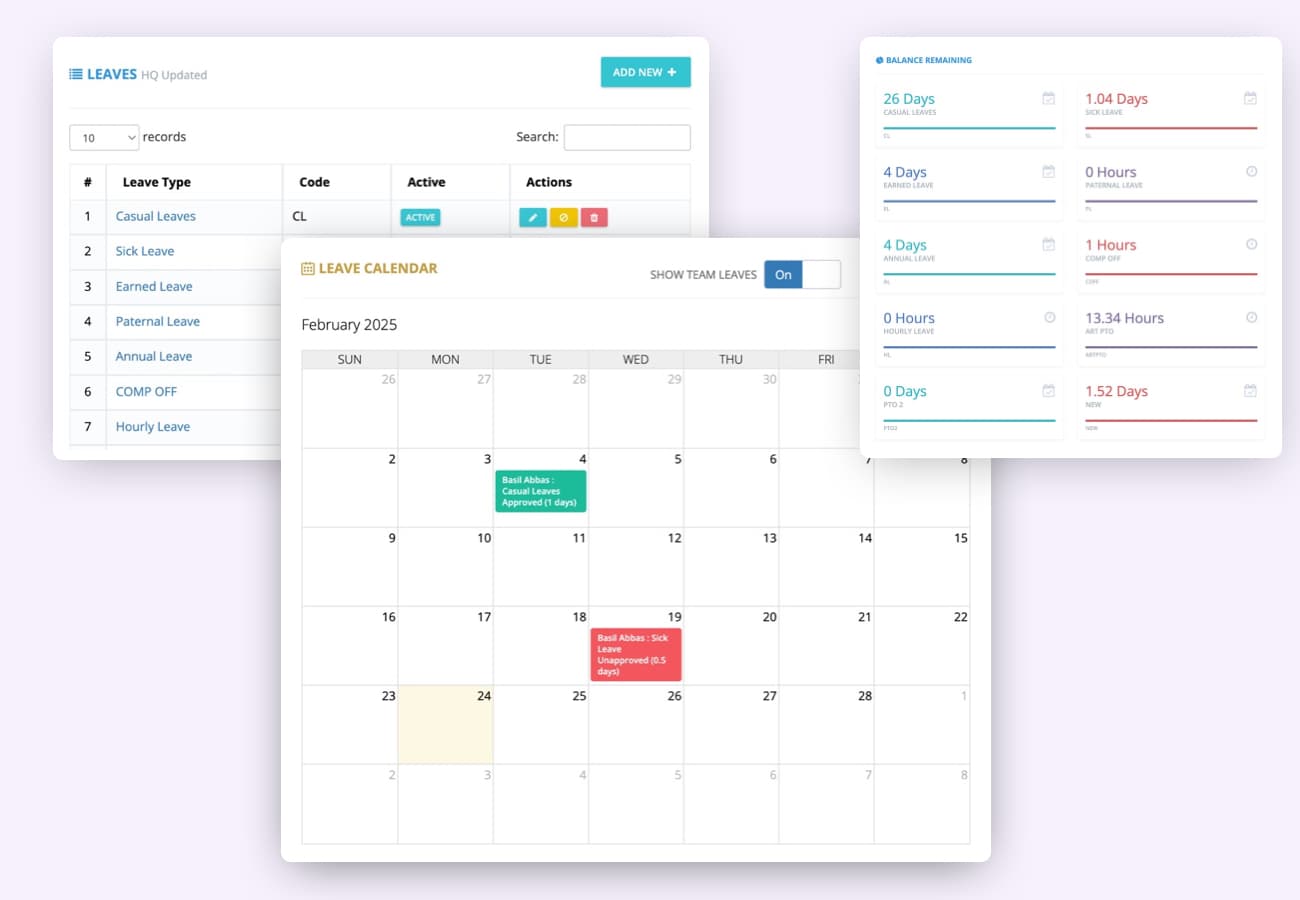
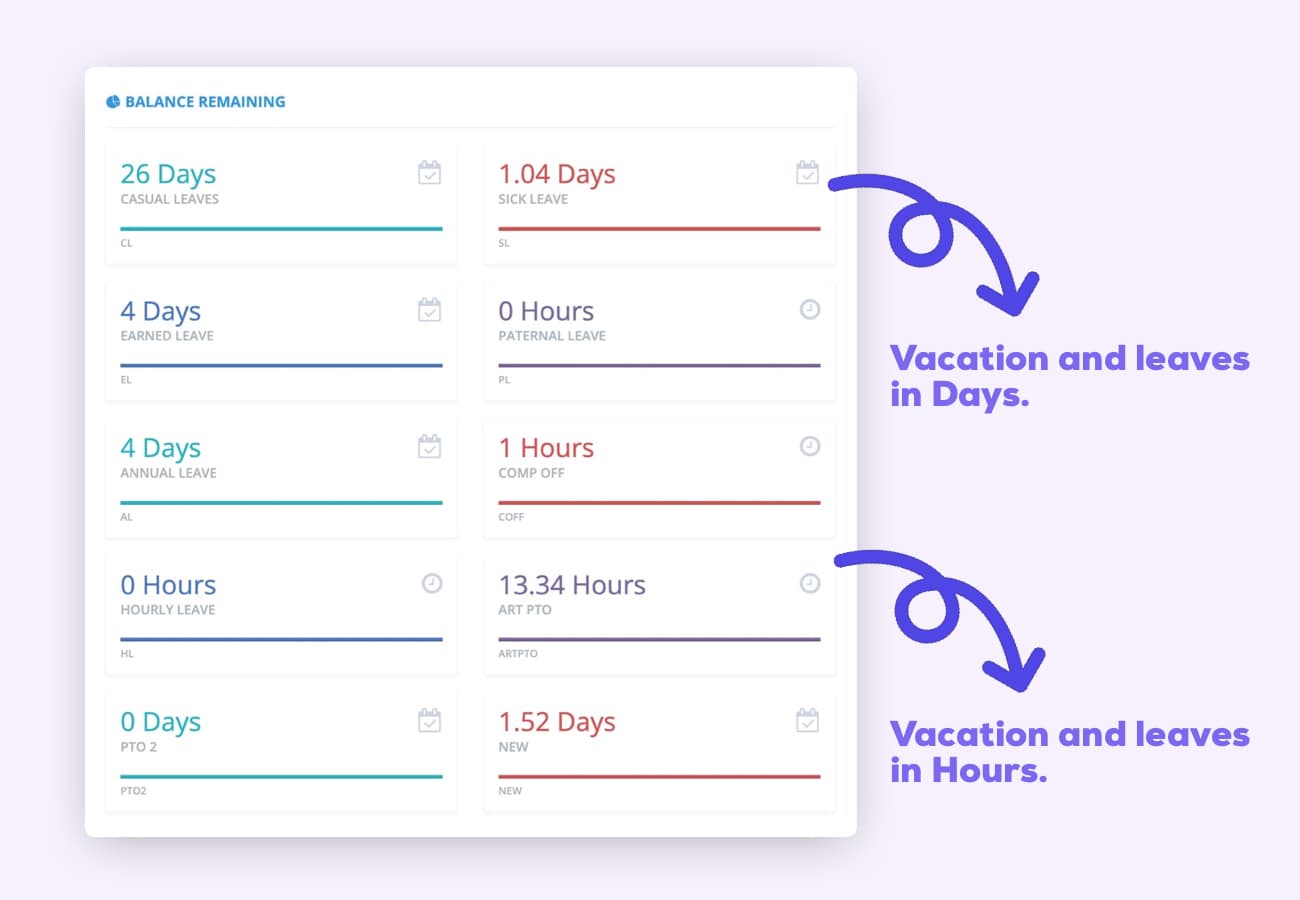
Days or hours
Track time off in days or hours — whichever fits your policies.
Automated accruals
Accrue by tenure, hours worked, anniversary — weekly, 2-weeks, monthly or yearly.
- Tenure rules
- Carry forward
- Probations
- Anniversary
Time off notifications
Employees and managers get instant updates on requests and approvals.
Vacation dashboard
See who's off, who's sick, and who's remote across the whole company.
Statutory annual leave by country
The legal minimum paid annual leave for a full-time employee on a five-day week, and whether public holidays are granted on top. Employers frequently offer more than the floor shown here.
| Country | Annual leave | Public holidays | Notes |
|---|---|---|---|
| United Kingdom | 28 days | — | 5.6 weeks; employers may count the 8 bank holidays within it. |
| Ireland | 20 days | +10 | 4 weeks, or 8% of hours worked, whichever is greater. |
| Australia | 20 days | +11 | 4 weeks under the NES, accruing progressively; plus long service leave. |
| New Zealand | 20 days | +12 | 4 weeks after 12 months of continuous employment. |
| Canada | 10 days | +9 | 2 weeks federally, rising with service; provinces set their own floors. |
| United States | None | — | No federal statutory paid leave; PTO is set entirely by employer policy. |
| India | 15 days | +3 | Earned leave varies by state Act; Factories Act gives 1 day per 20 worked. |
| Singapore | 7 days | +11 | 7 days in year one, rising by 1 a year to 14 days. |
| United Arab Emirates | 30 days | +14 | 30 calendar days a year after 12 months of service. |
| Saudi Arabia | 21 days | +4 | 21 days, rising to 30 after five years of service. |
| South Africa | 15 days | +12 | 21 consecutive days, i.e. 15 working days on a 5-day week. |
| Philippines | 5 days | +18 | 5 days service incentive leave, usable as vacation or sick leave. |
| Germany | 20 days | +9 | 20 days statutory on a 5-day week; 25–30 is the norm in practice. |
| France | 25 days | +11 | 5 weeks, accrued at 2.5 working days per month worked. |
| Spain | 22 days | +14 | 30 calendar days, i.e. 22 working days on a 5-day week. |
| Mexico | 12 days | +7 | 12 days in year one since the 2023 reform, rising with service. |
Frequently asked questions
How much annual leave am I entitled to in the UK?
Statutory entitlement is 5.6 weeks a year, which is 28 days for someone working five days a week. Multiply your days worked per week by 5.6 to get your own figure. The statutory maximum is 28 days, so a six-day week still gives 28.
Do bank holidays count as part of my annual leave?
They can. UK employers are permitted to include the eight bank holidays within the 28-day statutory allowance, which is why many contracts read '20 days plus bank holidays'. There is no legal right to take bank holidays off, or to be paid extra for working them, unless the contract says so.
How do I work out pro-rata holiday for a part-time employee?
Take the full-time allowance, divide by five, and multiply by the number of days the part-timer works. On a 28-day full-time allowance, a three-day-a-week employee gets 28 ÷ 5 × 3 = 16.8 days. Round up rather than down — rounding down risks falling below the statutory minimum.
How is holiday entitlement calculated for a mid-year starter?
Pro-rate the annual allowance across the remainder of the leave year. Someone joining with four months left on a 28-day allowance accrues 28 × 4 ÷ 12 = 9.33 days. Use the part-year toggle above to do this automatically.
What is the 12.07% holiday accrual rule?
For leave years starting on or after 1 April 2024, irregular-hours and part-year workers accrue holiday at 12.07% of the hours they work in each pay period. The figure comes from 5.6 weeks divided by the remaining 46.4 working weeks in the year.
Can my employer refuse a holiday request?
Yes. An employer can refuse a specific request as long as you are still able to take your full statutory entitlement within the leave year. They must give notice of refusal at least as long as the leave requested.
Can unused holiday be carried over to the next year?
The first four weeks of statutory leave generally cannot be carried over except where the worker was unable to take it due to sickness or family leave. The remaining 1.6 weeks can be carried over by agreement, and contractual leave above 5.6 weeks is entirely up to the employer.
More free tools and templates
Online Time Clock for Employees
Punch in and out in the browser — breaks deducted, no sign-up.
Attendance Sheet Template
Daily, weekly, monthly and yearly attendance grids with auto totals.
Employee Vacation Tracker
Log leave as date ranges — entitlement, taken and remaining calculate themselves.
Employee Absence Tracker
Occasions, days lost, absence rate and Bradford Factor per employee.
PTO Tracking Template
Track vacation, sick and personal leave balances per employee.
Timesheet Template
Weekly, biweekly, monthly and project timesheets for payroll.
Work Schedule Templates
Weekly, bi-weekly, monthly and shift schedules for your team.
Clock In / Clock Out Sheet
Printable sign-in log for recording start and finish times.
Time Off Request Form
A simple leave request form your team can fill in and submit.
Out of Office Message Templates
25 copy-and-paste auto-replies for vacation, sick leave and handovers.
“The mobile app time clock has revolutionized how we manage our remote team. It's intuitive, accurate, and has saved us countless hours in payroll processing. The GPS feature ensures accountability without being intrusive. It's a game-changer for businesses with a mobile workforce.”
“As a small business owner, I was skeptical about implementing a new time tracking system. But this mobile app has exceeded all my expectations. It's user-friendly, reliable, and the reporting features have given me invaluable insights into our productivity.”
“The integration capabilities of this mobile time clock app are outstanding. It seamlessly connects with our existing HR and payroll systems, creating a streamlined workflow that has significantly reduced errors and improved our overall efficiency.”
“What we love most is the real-time data and reports, which provide clear insights into employee attendance and payroll expenses. Plus, the ease of use means less administrative burden, allowing our HR team to focus on more strategic initiatives. If you’re looking for a reliable payroll solution that enhances efficiency and accuracy, clockit.io is the perfect choice! Highly recommended!”
“ClockIt.io cut our timesheet corrections by more than half. Exports line up perfectly with payroll and the GPS clock-ins keep our field crews honest without creating friction.”
“Geofencing and kiosk mode at each site solved our late punches. Managers love the late alerts and I love closing payroll on Friday in minutes.”
“ClockIt’s overtime rules and approvals gave us immediate savings. Clear audit trails and clean timesheets mean finance isn’t chasing people anymore.”
“We schedule across multiple locations and roles. ClockIt.io handles PTO, availability, and publishes updates to everyone’s phones instantly—no more group chats.”
“Our trainers swap shifts right in the app and confirm attendance. Attendance and payroll line up perfectly—ClockIt just works.”
“Setup was fast and the support team was outstanding. We rolled out ClockIt to 120 staff in a week and adoption was near 100% on day one.”
“The reports in ClockIt.io make our monthly reviews painless. We finally have visibility into attendance trends and actual hours by department.”
“Time‑off requests, approvals, and balances are all in one place. Doctors see who’s off at a glance and we avoid coverage gaps.”
“For crews on the move, ClockIt’s GPS punch-ins and site-based rules keep things accurate. It’s the reliability we were missing before.”
“We tried three tools before ClockIt.io. This is the first one our team actually likes using—and it saves my admin two hours every payroll run.”
“Implementing ClockIt's biometric kiosks eliminated buddy punching overnight. The facial recognition is instant and works perfectly even in our warehouse environment. It's the most secure time tracking decision we've made.”